The Importance of Directional Signage in Businesses and Facilities
The Importance of Directional Signage in Businesses and Facilities
Directional signage plays an important role in organizing businesses and facilities. It helps visitors, customers, and employees find their way easily, improves the visitor experience, and creates a more professional environment.
Whether you manage a company, factory, hospital, commercial office, or service facility, choosing the right directional signs can improve navigation, organize spaces, and strengthen your visual identity.
What Is Directional Signage?
Directional signage refers to signs designed to guide people and help them identify departments, facilities, entrances, exits, and routes within or around a building. These signs are available in different sizes, materials, and designs depending on the location and intended purpose.
Types of Directional Signage and Their Uses
1. Department and Office Signs
These signs identify departments, offices, meeting rooms, and other areas within a facility. They help employees and visitors locate the right destination quickly and easily.
2. Directional Signs
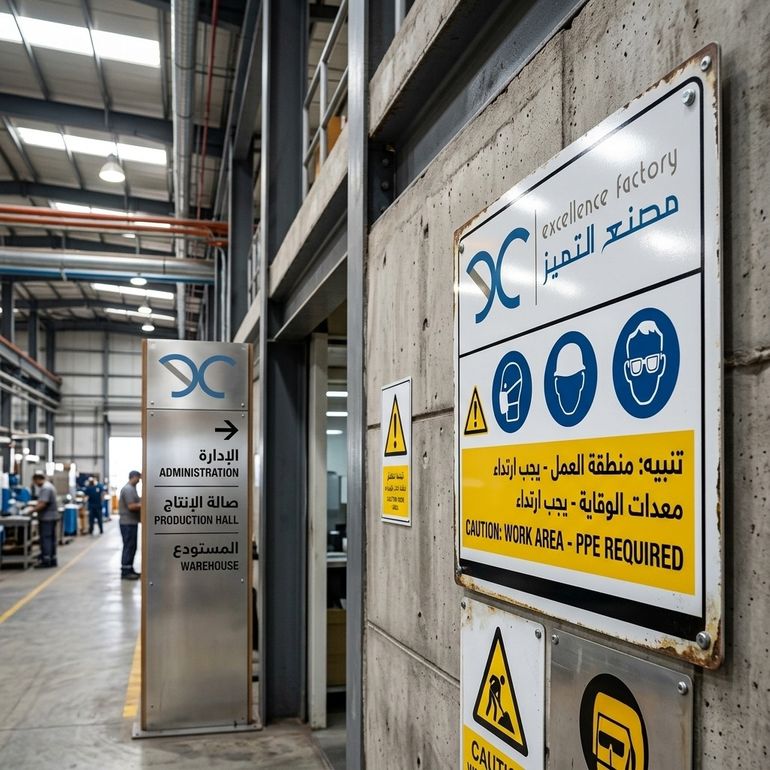
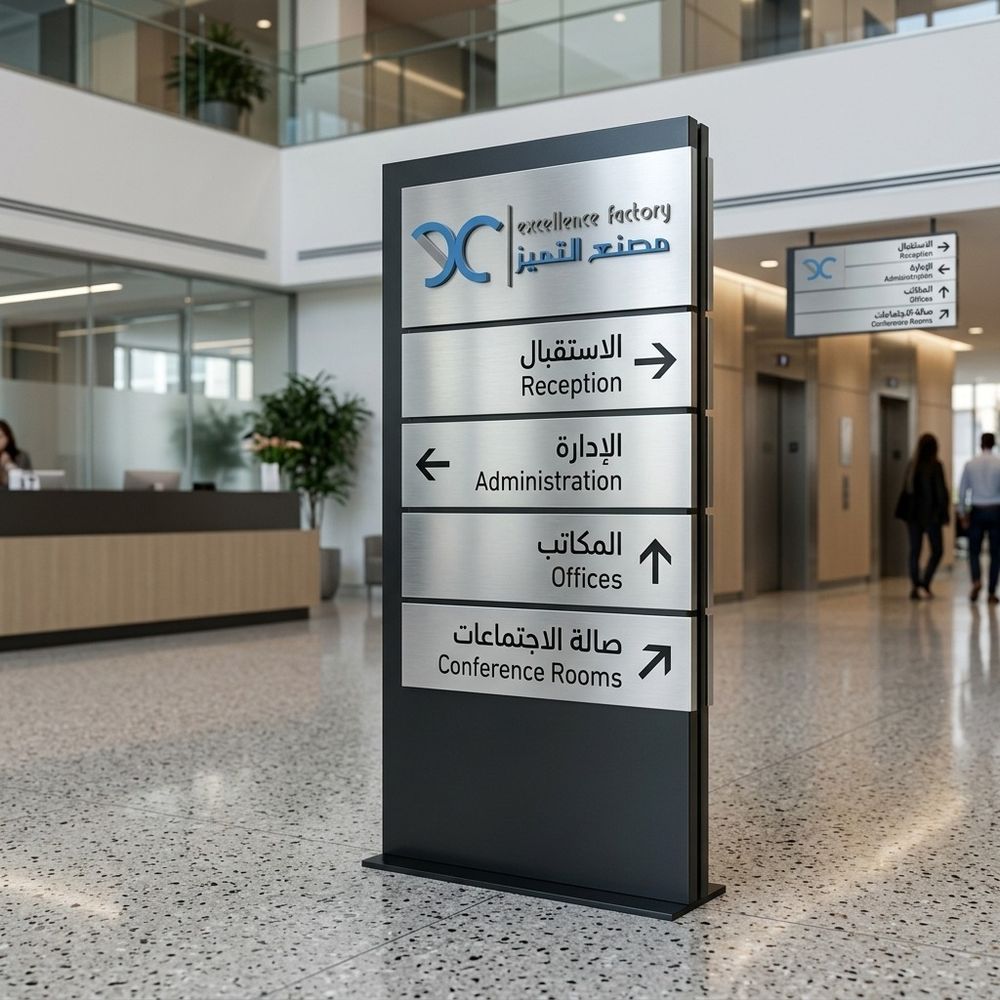
Directional signs guide people toward specific locations, such as reception areas, elevators, restrooms, exits, and different departments. They are especially useful in large buildings and facilities with multiple sections.
3. Safety and Warning Signs
Safety signs communicate important instructions, highlight potential hazards, and identify emergency equipment and exits. They should be designed according to the facility's requirements and applicable safety regulations.
4. Reception Signs
Reception signs are commonly placed at company and office entrances. They help identify the business, welcome visitors, and create a clear, professional first impression.
5. Outdoor Signage
Outdoor signs identify buildings, entrances, parking areas, and external facilities. Their materials and finishes should be selected according to the weather conditions and the intended use.
Benefits of Directional Signage for Businesses
Improves Navigation: Helps visitors and customers find departments and services without repeatedly asking for directions.
Organizes Movement: Guides people through buildings and reduces confusion, particularly in factories, large offices, and multi-department facilities.
Strengthens Brand Identity: Incorporating the company's logo, colors, and visual style makes signage part of a consistent brand identity.
Enhances the Visitor Experience: Clear information makes visits easier, more convenient, and more comfortable.
Creates a Professional Image: Well-designed signage reflects attention to detail and contributes to a more organized business environment.
How to Choose the Right Directional Signs for Your Facility
Before ordering directional signage, consider the following factors:
- Define the purpose: Decide whether the signs will guide visitors, identify departments, or communicate safety instructions.
- Choose the right location: Place signs where they are easy to see and read.
- Select suitable dimensions: The size should depend on the viewing distance and the location where the sign will be installed.
- Choose appropriate materials: Consider whether the sign will be used indoors or outdoors and whether it will be exposed to sunlight, moisture, or other environmental conditions.
- Keep the design clear: Use readable fonts, contrasting colors, and easy-to-understand symbols.
- Maintain brand consistency: Match the signage colors, fonts, and logo with the facility's other printed materials.
Common Directional Signage Mistakes to Avoid
Common mistakes include using fonts that are too small, placing signs in hard-to-see locations, overcrowding designs with too much text, and choosing colors that make information difficult to read.
It is also important to review all wording, directions, dimensions, and design details before approving a sign for production. Proper planning helps ensure that every sign serves its intended purpose.
Conclusion
Directional signage is more than a way to display information. It is an essential part of organizing facilities, improving visitor experiences, and creating a professional business environment.
If you are looking for customized printing solutions for your business or organization, visit Tamiez Store to explore the available products and services. We offer delivery across Saudi Arabia The Importance of Directional Signage in Businesses and Facilities
Directional signage plays an important role in organizing businesses and facilities. It helps visitors, customers, and employees find their way easily, improves the visitor experience, and creates a more professional environment.
Whether you manage a company, factory, hospital, commercial office, or service facility, choosing the right directional signs can improve navigation, organize spaces, and strengthen your visual identity.
What Is Directional Signage?
Directional signage refers to signs designed to guide people and help them identify departments, facilities, entrances, exits, and routes within or around a building. These signs are available in different sizes, materials, and designs depending on the location and intended purpose.
Types of Directional Signage and Their Uses
1. Department and Office Signs
These signs identify departments, offices, meeting rooms, and other areas within a facility. They help employees and visitors locate the right destination quickly and easily.
2. Directional Signs
Directional signs guide people toward specific locations, such as reception areas, elevators, restrooms, exits, and different departments. They are especially useful in large buildings and facilities with multiple sections.
3. Safety and Warning Signs
Safety signs communicate important instructions, highlight potential hazards, and identify emergency equipment and exits. They should be designed according to the facility's requirements and applicable safety regulations.
4. Reception Signs
Reception signs are commonly placed at company and office entrances. They help identify the business, welcome visitors, and create a clear, professional first impression.
5. Outdoor Signage
Outdoor signs identify buildings, entrances, parking areas, and external facilities. Their materials and finishes should be selected according to the weather conditions and the intended use.
Benefits of Directional Signage for Businesses
Improves Navigation: Helps visitors and customers find departments and services without repeatedly asking for directions.
Organizes Movement: Guides people through buildings and reduces confusion, particularly in factories, large offices, and multi-department facilities.
Strengthens Brand Identity: Incorporating the company's logo, colors, and visual style makes signage part of a consistent brand identity.
Enhances the Visitor Experience: Clear information makes visits easier, more convenient, and more comfortable.
Creates a Professional Image: Well-designed signage reflects attention to detail and contributes to a more organized business environment.
How to Choose the Right Directional Signs for Your Facility
Before ordering directional signage, consider the following factors:
- Define the purpose: Decide whether the signs will guide visitors, identify departments, or communicate safety instructions.
- Choose the right location: Place signs where they are easy to see and read.
- Select suitable dimensions: The size should depend on the viewing distance and the location where the sign will be installed.
- Choose appropriate materials: Consider whether the sign will be used indoors or outdoors and whether it will be exposed to sunlight, moisture, or other environmental conditions.
- Keep the design clear: Use readable fonts, contrasting colors, and easy-to-understand symbols.
- Maintain brand consistency: Match the signage colors, fonts, and logo with the facility's other printed materials.
Common Directional Signage Mistakes to Avoid
Common mistakes include using fonts that are too small, placing signs in hard-to-see locations, overcrowding designs with too much text, and choosing colors that make information difficult to read.
It is also important to review all wording, directions, dimensions, and design details before approving a sign for production. Proper planning helps ensure that every sign serves its intended purpose.
Conclusion
Directional signage is more than a way to display information. It is an essential part of organizing facilities, improving visitor experiences, and creating a professional business environment.
If you are looking for customized printing solutions for your business or organization, visit Tamiez Store to explore the available products and services. We offer delivery across Saudi Arabia.The Importance of Directional Signage in Businesses and Facilities
Directional signage plays an important role in organizing businesses and facilities. It helps visitors, customers, and employees find their way easily, improves the visitor experience, and creates a more professional environment.
Whether you manage a company, factory, hospital, commercial office, or service facility, choosing the right directional signs can improve navigation, organize spaces, and strengthen your visual identity.
What Is Directional Signage?
Directional signage refers to signs designed to guide people and help them identify departments, facilities, entrances, exits, and routes within or around a building. These signs are available in different sizes, materials, and designs depending on the location and intended purpose.
Types of Directional Signage and Their Uses
1. Department and Office Signs
These signs identify departments, offices, meeting rooms, and other areas within a facility. They help employees and visitors locate the right destination quickly and easily.
2. Directional Signs
Directional signs guide people toward specific locations, such as reception areas, elevators, restrooms, exits, and different departments. They are especially useful in large buildings and facilities with multiple sections.
3. Safety and Warning Signs
Safety signs communicate important instructions, highlight potential hazards, and identify emergency equipment and exits. They should be designed according to the facility's requirements and applicable safety regulations.
4. Reception Signs
Reception signs are commonly placed at company and office entrances. They help identify the business, welcome visitors, and create a clear, professional first impression.
5. Outdoor Signage
Outdoor signs identify buildings, entrances, parking areas, and external facilities. Their materials and finishes should be selected according to the weather conditions and the intended use.
Benefits of Directional Signage for Businesses
Improves Navigation: Helps visitors and customers find departments and services without repeatedly asking for directions.
Organizes Movement: Guides people through buildings and reduces confusion, particularly in factories, large offices, and multi-department facilities.
Strengthens Brand Identity: Incorporating the company's logo, colors, and visual style makes signage part of a consistent brand identity.
Enhances the Visitor Experience: Clear information makes visits easier, more convenient, and more comfortable.
Creates a Professional Image: Well-designed signage reflects attention to detail and contributes to a more organized business environment.
How to Choose the Right Directional Signs for Your Facility
Before ordering directional signage, consider the following factors:
- Define the purpose: Decide whether the signs will guide visitors, identify departments, or communicate safety instructions.
- Choose the right location: Place signs where they are easy to see and read.
- Select suitable dimensions: The size should depend on the viewing distance and the location where the sign will be installed.
- Choose appropriate materials: Consider whether the sign will be used indoors or outdoors and whether it will be exposed to sunlight, moisture, or other environmental conditions.
- Keep the design clear: Use readable fonts, contrasting colors, and easy-to-understand symbols.
- Maintain brand consistency: Match the signage colors, fonts, and logo with the facility's other printed materials.
Common Directional Signage Mistakes to Avoid
Common mistakes include using fonts that are too small, placing signs in hard-to-see locations, overcrowding designs with too much text, and choosing colors that make information difficult to read.
It is also important to review all wording, directions, dimensions, and design details before approving a sign for production. Proper planning helps ensure that every sign serves its intended purpose.
Conclusion
Directional signage is more than a way to display information. It is an essential part of organizing facilities, improving visitor experiences, and creating a professional business environment.
If you are looking for customized printing solutions for your business or organization, visit Tamiez Store to explore the available products and services. We offer delivery across Saudi Arabia Or contact directly at the number 0501759005